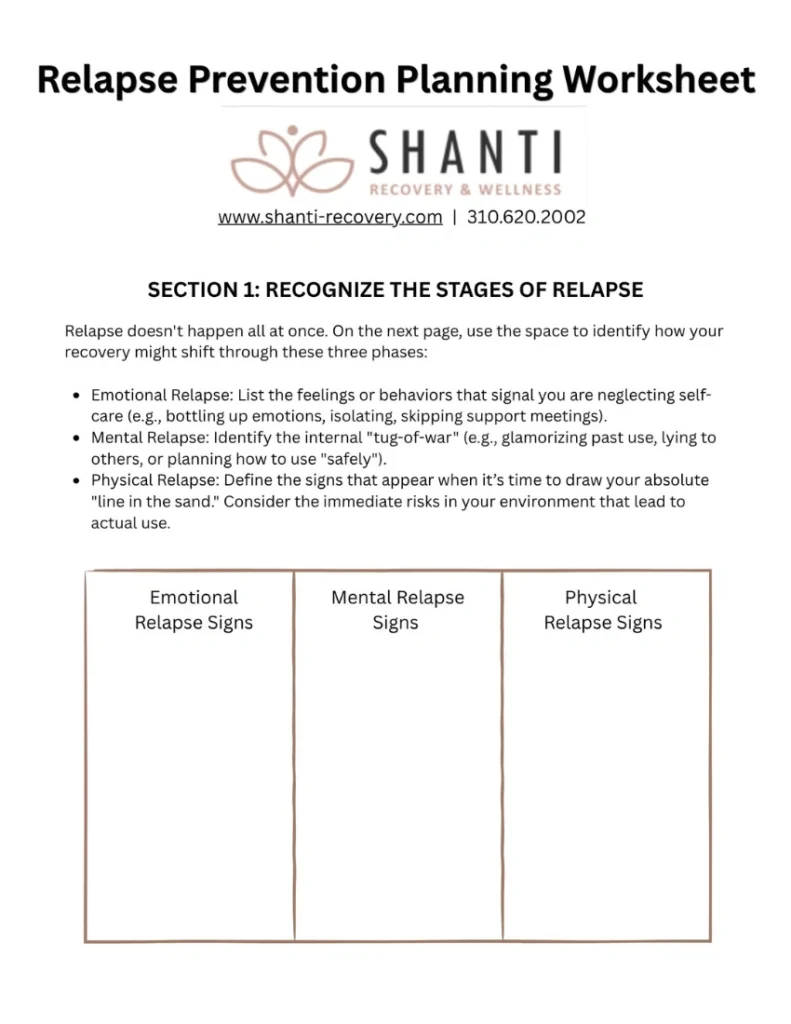
1 – Knowing the Three Stages of Relapse Can Help You Respond Faster
Relapse is a multi-stage process, not a singular point in time. When someone returns to active substance use, they have often been in a relapse mindset for weeks.
Once you understand the three stages of relapse (emotional, mental, and physical), you gain the ability to regain control before you slip up.
Using these to ‘play the tape through‘ when considering using or drinking can also be a helpful method.
Emotional Relapse: The First Warning Signs
During the emotional relapse stage, your emotions and behaviors are setting you up for using, even if you aren’t actively thinking about it yet. You might catch yourself self-isolating, skipping support meetings, or falling into poor sleep or eating habits.
When you see these, your first priority must be self-care. It’s time to find a support group and reflect on what’s leading to those feelings.
Mental Relapse: Winning the Internal Tug-of-War
The “war of the mind” starts in the second phase of relapse. Examples of the inner struggles include romanticizing your memories of past use or lying to your loved ones about your mental state. You might also think of using in terms of bargaining, telling yourself you can use drugs or drink alcohol just one more time.
If you catch yourself in these thought patterns, reach out to a therapist or your sponsor. They may have some good suggestions, including effective activities like mindfulness meditation and exercise, to manage the cravings.
It’s not too late to stop. Sharing the information early can help you stop the cravings in their tracks.
Physical Relapse: Take Immediate Action Before Circumstances Worsen
The third stage of relapse is actually using again. If you reach this stage, it is not the end of recovery. However, it does require immediate attention.
Whether you relapse during IOP itself or have relapsed following completion of a program, communication and reaching out for help is vital.
You must call someone from your emergency list to prevent the situation from becoming more complicated.
2 – Identifying Personal Relapse Triggers in Your Daily Environment
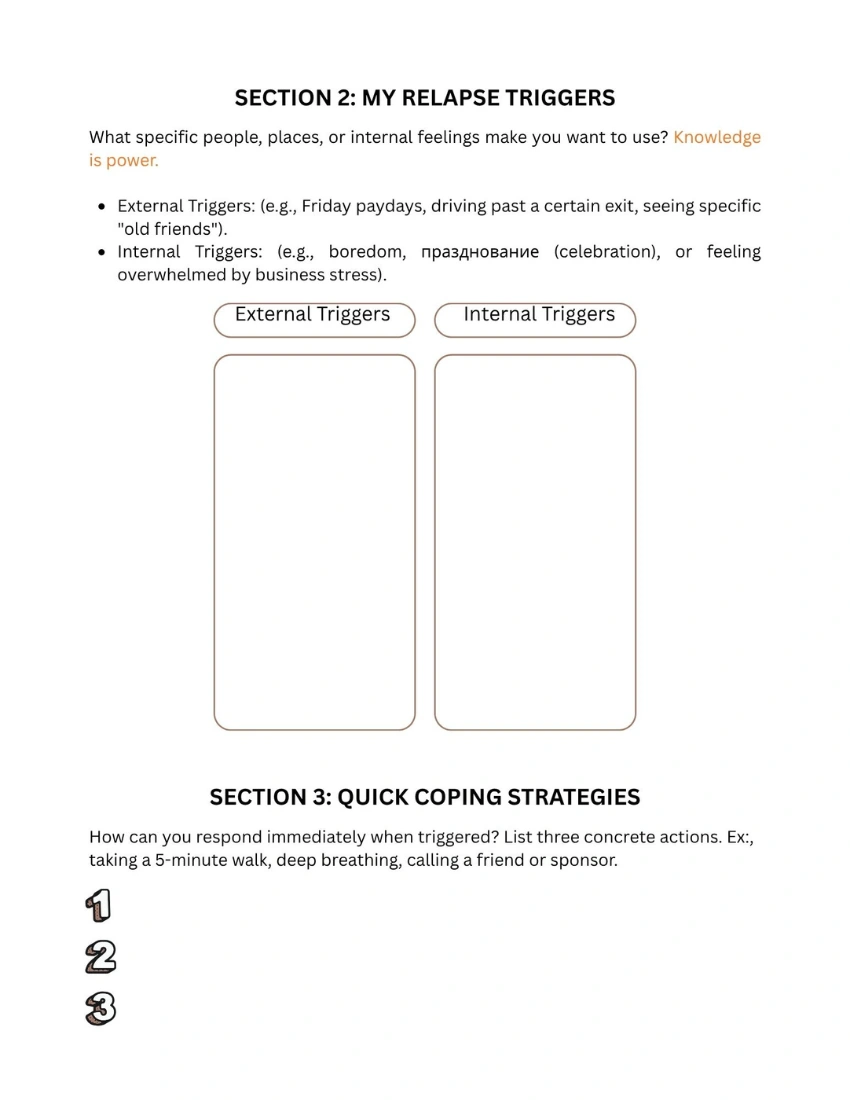
Triggers are the sparks that can light the fire of a craving. Our worksheet helps you understand these more deeply so they don’t catch you off guard.
External Triggers: What People, Places, or Situations Lead to Addiction Behaviors?
The National Institute on Alcohol Abuse and Alcoholism (NIAAA) defines external triggers as the people, places, emotions, and tempting situations that can make you lean back toward substance use. NIH also notes that external factors in life are easier to control than internal.
Internal Triggers: Do Stress, Boredom, or Emotions Challenge You?
Internal triggers are harder to manage because you carry them inside you. Some examples include job stress or life changes that make using feel like an escape. When you can identify these internal conflicts, you can prepare your response before the feelings become too overwhelming.
3 – Create a List of Effective Coping Strategies to Prevent Relapse
Once you understand your personal triggers, you will be ready to create an action plan. Coping strategies are the tools you use to stay grounded and avoid use.
For a quick win, our worksheet asks you to come up with 3 quick ways to avoid giving more fuel to that craving. You will choose whatever works best for you – a quick walk with the dog, a hot shower, or 10 minutes immersed in a good book are simple solutions.
While not necessary to complete our worksheet, it’s worth mentioning that there are additional, more formal coping tools. An example, the ‘If – Then’ strategy can be an effective tool for managing triggers by pairing identified triggers with specific coping responses. You decide in advance that “if” a specific trigger happens, then” you will use a particular coping tool. This forethought removes the decision-making in the heat of the moment.
4 – Gain New Perspective on Managing Cravings with a 10 Minute Delay
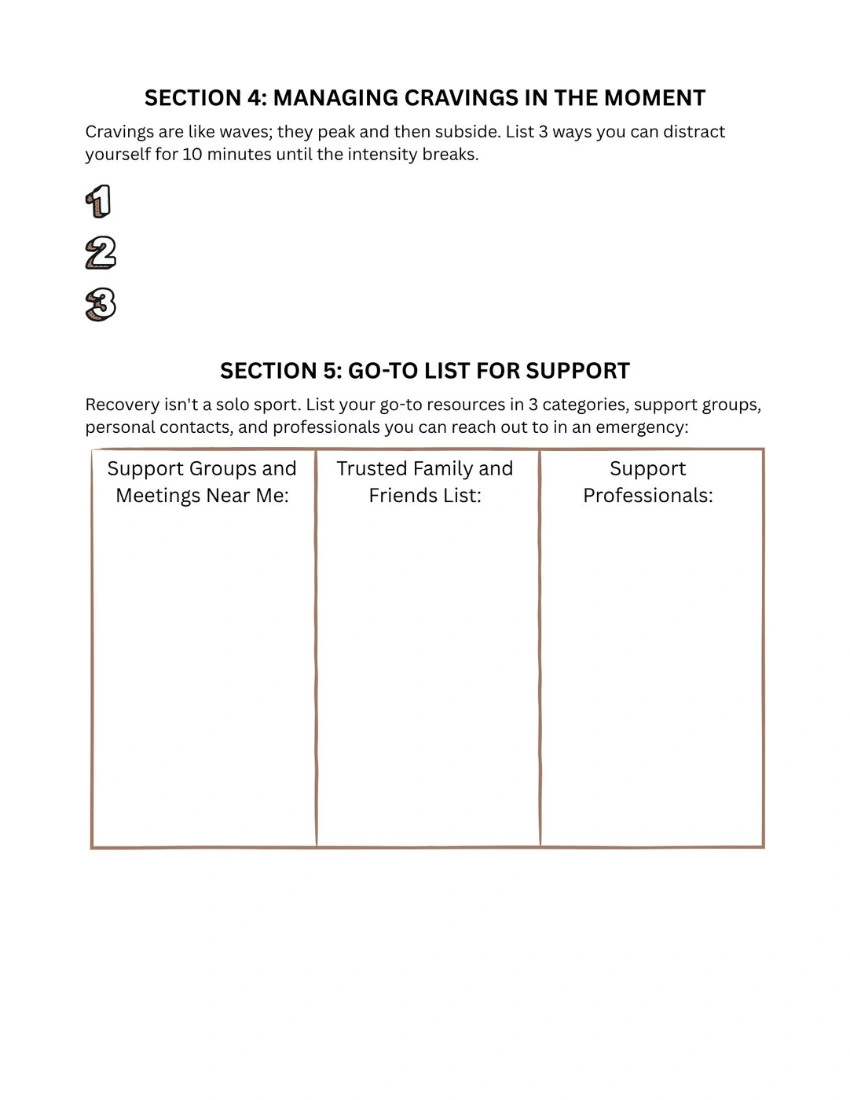
Cravings can often be the most intimindating part of the entire recovery process. But that doesn’t mean that you will have a setback; it just means you need to have a solid plan.
Section 4 of your relapse prevention plan shhet helps you manage these urges the moment they arrive. You will list three ways you can distract yourself from the craving to create a buffer between the urge and taking action.
Once you decide on an activity, you’ll follow the “10-minute rule,” part of cognitive behavioral therapy. When a craving hits, commit to avoiding use for 10 minutes. That’s it. During that time, your priority is to engage in a distraction, any physical or mental task. You might fold your laundry, play solitaire, or do a visualization exercise. Do what works for you.
By the time the 10 minutes have passed, most people find that the physical intensity of the urge has lessened. Learning to sit with temporary discomfort strengthens your ability to maintain sobriety.
5 – List Your Support Groups and Trusted People in the Recovery Community
In this section of your relapse prevention plan, you will develop an emergency contact list. It should include specific people to call during a crisis to provide immediate support. Building a support network is critical for individuals in recovery, as it provides essential connections during emergencies or difficult times, helping to maintain sobriety.
We also ask you to include local support groups, an effective way to enhance recovery support systems. Knowing that a helpful resource is nearby can give you peace of mind.
6 – Remain Focused on Treatment by Remembering Your Recovery Goals
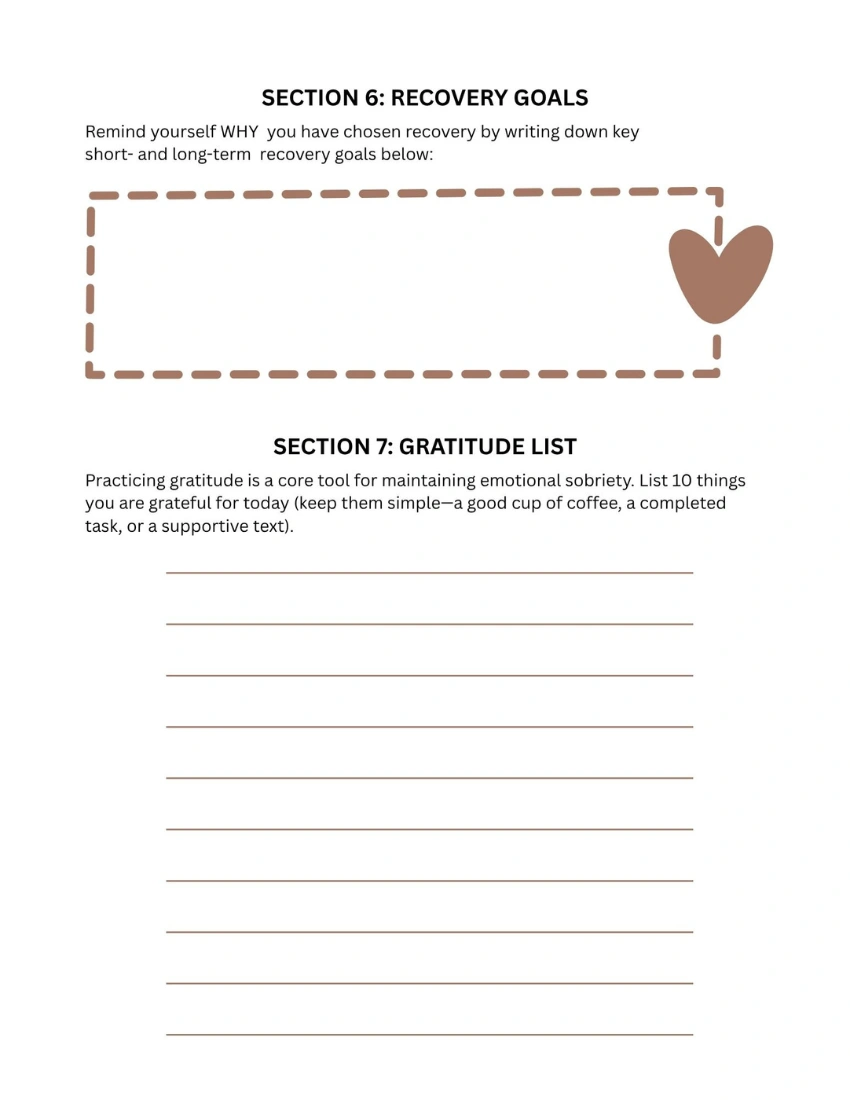
Recovery goals are highly personal for each client. As you work, your personal motivations for staying sober should outline individual reasons such as improving relationships or achieving career goals. On our sheet, you will reflect on your recovery goals and recommit to them in the box provided.
In some cases, you may discover that your recovery goals have changed. That’s okay. As you become stronger in recovery, your needs and goals must adapt with you.
7 – Writing a Gratitude List (One of the Most Healthy Coping Skills)
It’s pretty difficult for the brain to be in a state of craving and gratitude at the same time. Writing a gratitude list shifts your focus from focusing on what you might think you’re “missing out on,” and shifts it to being optimistic about the things that you currently have.
List ten things you are thankful for in the moment. These things can be as simple as waking up sober or a text from a supportive friend.
Feel free to use this space as a 10-minute delay distraction, as you read about in #4.
A Personalized Relapse Plan Is the Most Useful Tool of Addiction Treatment
The Recovery Research Institute, an affiliate of Harvard Medical School, notes that recovery requires identifying high-risk situations and making a response plan before it becomes necessary.
Proactive planning in relapse prevention allows individuals to anticipate high-risk situations and plan responses before cravings occur. Our Relapse Prevention Planning Worksheet is evidence-based and comes from years of clinical experience.
However, recovery is an evolving process, and relapse prevention worksheets should be reviewed and updated regularly as individual needs change.
Long-Term Sobriety Requires Self-Awareness and a Structured Way of Making Progress
Increased self-awareness helps individuals recognize emotional or mental shifts before they lead to relapse. Combining that improved self-knowledge with a structured recovery plan increases the chances of staying clean and sober.
Self-Accountability and Your Relapse Prevention Plan
Creating a relapse prevention plan typically involves setting recovery goals, identifying triggers, managing cravings, developing coping strategies, and building a support network. These are all tools that help you build accountability as you continue making headway.
Get Support for Substance Use Challenges With Shanti Today

Working with the professionals at Shanti allows you to experience evidence-based therapies, like Cognitive Behavioral Therapy (CBT), from the comfort of your home. CBT is an important addiction therapy approach that helps people in recovery replace distorted, negative thoughts with new, more positive behaviors.
Our goal is to give each client the empowerment and control they need through a concrete, actionable plan during stressful times in recovery.
If you have questions about our Virtual IOP program, our admissions representatives are ready to help, and all calls are confidential, so please reach out now.