Virtual IOP Programs for Dual Diagnosis Disorder in California
For many Californians living with both a substance use disorder and a co-occurring mental health condition, the question of whether to seek help is rarely simple.
Transportation barriers, work schedules, the fear of being recognized when walking into a clinic, or simply the exhaustion that comes with managing two intertwined conditions at once.
These are real reasons people delay or avoid treatment altogether.
The good news, supported by a growing body of research, is that telehealth for dual diagnosis is not only considered effective, but it may also actually reach and serve people better than traditional in-person programs in a number of meaningful ways.
Shanti Recovery and Wellness offers remote treatment services for dual diagnosis disorder for residents in the state of California with their telehealth addiction treatment services, and our resource looks at the latest studies and more regarding this crucial topic.
What Dual Diagnosis Treatment Actually Requires

Dual diagnosis, sometimes called co-occurring disorder treatment, addresses the simultaneous presence of a substance use disorder and at least one mental health condition, such as depression, anxiety, PTSD, or bipolar disorder.
Treating both conditions together is clinically essential because each tends to fuel the other. A person managing untreated anxiety may use alcohol to quiet their nervous system, while someone in early recovery from opioid use disorder may find that underlying depression resurfaces with intensity.
Why Integrated Care Is the Standard
Integrated care models, where mental health and addiction treatment are delivered by the same clinical team rather than in separate silos, produce better outcomes than sequential or parallel treatment approaches. This is not a new finding.
The challenge, historically, has been access. California is a large and diverse state. The distance between a person in a rural county and the nearest intensive outpatient program offering integrated dual diagnosis services can span many miles, several hours of driving, and transportation costs that are simply out of reach.
The Effectiveness of Telehealth for Dual Diagnosis
The research base supporting virtual addiction treatment for co-occurring disorders has grown substantially, particularly since 2020.
Multiple peer-reviewed studies (seen in our References section) have found that telehealth-delivered mental health and substance use treatment produces outcomes that are comparable to in-person care across a range of measures, including treatment retention, symptom reduction, and patient satisfaction.
Retention Rates and Engagement
One of the strongest indicators of treatment effectiveness is whether people stay in care long enough to benefit. Telehealth programs consistently show retention rates that match or exceed those of in-person intensive outpatient programs.
This matters because engagement and attendance are often where in-person programs lose people. When a session is accessible from home, a person does not have to weigh the cost of the bus fare, arrange childcare, or take time off work. The practical lift is lower, and the follow-through tends to be higher.
Removing the Barriers That Keep People From Care

California’s geography and demographics make access to behavioral healthcare services deeply unequal. In rural counties across the Central Valley, the Sierra Nevada foothills, or the far reaches of Northern California, there may be no local provider with dual diagnosis training at all.
Telehealth changes that calculation in a fundamental way.
Transportation and Rural Access
Whether someone lives in Bakersfield, Redding, or a smaller community without reliable public transit, virtual addiction treatment removes the transportation variable entirely. A person can attend group therapy, meet with a prescribing clinician, and participate in individual counseling without leaving their home.
For individuals in recovery, this also removes one of the less-discussed stressors of in-person attendance: the commute itself, which can be fatiguing and, for some, a period of vulnerability when cravings are most likely to arise.
Flexibility and Time Constraints
Work schedules, family obligations, and caregiving responsibilities do not pause for treatment. Many people who would genuinely benefit from an intensive outpatient program are unable to attend because their schedule simply cannot accommodate fixed hours at a facility.
Telehealth programs tend to offer greater scheduling flexibility. Morning groups, evening sessions, and weekend options make it more realistic for a working parent or a person managing a complex life to actually show up consistently.
Privacy and the Willingness to Seek Help

Stigma is still a significant barrier to addiction treatment and mental health care in California and across the country. Some people do not seek help because they are afraid of being seen.
A neighbor in the parking lot of a treatment center, a coworker who might ask questions, a small community where everyone knows everyone. These are not paranoid concerns.
They are reasonable worries that prevent real people from getting real help.
How Telehealth Protects Patient Privacy
Virtual dual diagnosis treatment allows a person to receive care from wherever they feel safe and private. The process of attending a session looks, from the outside, like any other video call. There is no building to walk into, no waiting room to share, no visible marker of what kind of help someone is seeking.
For individuals in professional roles, smaller communities, or households where they have not yet disclosed their struggles to others, this layer of privacy can be the difference between seeking care and continuing to go without it.
Telehealth and Continuity of Care
One of the underappreciated advantages of virtual addiction treatment is its impact on continuity of care.
In traditional in-person models, transitions can be disruptive, especially when a patient moves, changes jobs, or faces a scheduling conflict; they may fall through the cracks between one level of care and another. Telehealth significantly reduces these disruptions.
Staying Connected Through Life’s Transitions
A person stepping down from a higher level of residential treatment or inpatient care can transition into a virtual intensive outpatient program without a geographic gap in services. If that person relocates within California, their clinical team does not change.
Their relationships with their therapist, prescriber, and support systems remain intact. This continuity supports recovery in ways that are difficult to quantify but deeply meaningful. Programs like Shanti Recovery and Wellness are built around this model, providing integrated dual diagnosis care through California-licensed clinicians who serve patients across the state.
The Impact of Telehealth on Dual Diagnosis Outcomes in California

Research specifically examining the impact of telehealth treatment on dual-diagnosis disorder suggests that virtual delivery does not dilute clinical quality.
Studies examining telehealth-delivered care for populations with both mental health and substance use disorders have found significant improvements in depression symptoms, anxiety severity, and substance use frequency.
Patients report feeling equally or more supported than they expected, and many note that the reduced burden of attendance actually helps them engage more honestly in sessions because they are in a familiar environment.
Can Persons With Dual Diagnosis See Positive Outcomes With Telehealth Treatment?
The answer, based on available evidence, is yes. Persons with dual diagnosis can and do achieve meaningful positive outcomes through telehealth treatment. The essential elements of effective care: therapeutic alliance, individualized treatment planning, peer support, and medication management when appropriate, are all deliverable through virtual platforms.
California-licensed providers are equipped to prescribe, monitor, and adjust medication-assisted treatment for substance use disorders through telehealth, within applicable regulatory frameworks, providing another critical layer of integrated support.
When Telehealth Is the Right Fit And When It Is Not
Telehealth dual diagnosis treatment is appropriate for many people, but it is not a one-size-fits-all solution.
Someone in the early stages of alcohol withdrawal, opioid dependence requiring close medical monitoring, or presenting with psychiatric symptoms severe enough to require stabilization should first be evaluated for a higher level of care, which may include medical detox or inpatient psychiatric services.
Telehealth intensive outpatient programs are best suited for individuals who are medically stable and who can safely engage in treatment from their home environment.
Is Telehealth Just as Effective as In-Person Treatment for Dual Diagnosis Disorder?
For appropriate candidates, the evidence suggests yes, and in some respects, particularly around access, retention, and privacy, the data points to advantages that in-person programs cannot easily replicate.
This is not a dismissal of the value of in-person visits. It is an honest assessment of the evidence and of what matters most for a population that has historically gone undertreated due to circumstances rather than unwillingness.
Choosing Telehealth for Dual Diagnosis Disorders at Shanti Recovery & Wellness
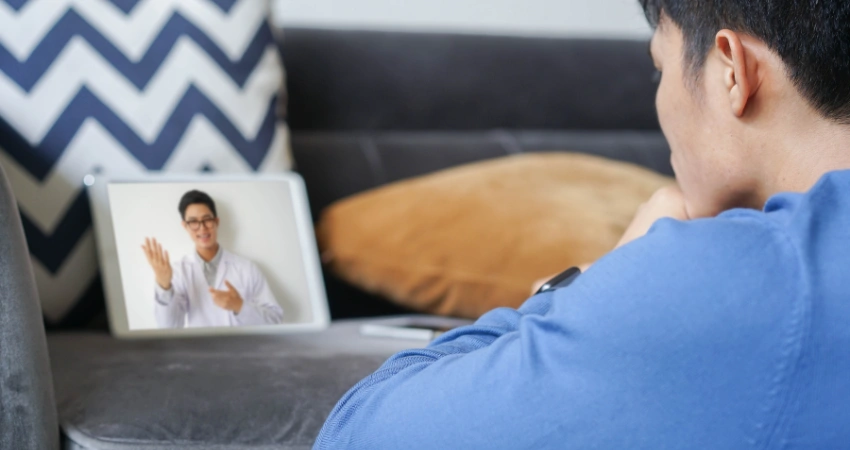
The question of whether telehealth for dual diagnosis is considered effective is one that deserves a clear, evidence-grounded answer: it is.
The effectiveness of telehealth for dual diagnosis treatment is supported by research, reflected in strong retention rates, and experienced directly by the Californians who have found their way into recovery through a screen that met them exactly where they were.
The model is not a compromise. For many people, it is the first treatment option that has ever truly been within reach.
Our programs at Shanti Recovery and Wellness work with patients across California’s diverse communities, recognizing that effective care is care people can actually access and attend.
Please reach out confidentially today to learn more about our offerings.